“F**k the default method” - Reflections on MAD//Fest 2026
Three days and multiple sessions later, Hazel reflects on the overheard and overused, the sessions that stood out, and the truth about what tech CEOs want their children to study. Spoiler: It's not what you think...
A word that kept creeping in when I attended MAD//fest last week was ‘radical’, “We need radical honesty that gives us goosebumps and discomfort”, “People need a creative partner that thinks radically for them”, “We need radical authenticity” were some of the quotes I heard. I’m not totally convinced we need to be that extreme but breaking out of this encroaching creepy AI Stepford Wives world occasionally and connecting back with each other is a must.
Other words heavily featured in the talks were ‘messy’ and ‘play’, inherently human words that involve imperfection, pushing boundaries and discovery. “Messiness is the new luxury” was something else I heard.
This year’s MAD//fest theme was ‘The Human Touch’; predominantly focussing on when and how to use AI whilst maintaining the ever-important emotional connection.
When we describe someone or something as ‘robotic’, we tend to imply a monotonal voice, a stiffness, a lack of charisma or charm, potentially something too perfect. A perfect insult for someone has now become “They are a bit AI” so it seems that to be ‘AI’ is to be unrelatable or uncomfortable. In Louis Theroux’s talk, when asked about the characters he had met over his career he said: “the weirdest thing about weird people is how normal they are”. He implied that pretending things are good and ‘normal’, is actually the least authentic and ‘AI’ thing we could be doing.
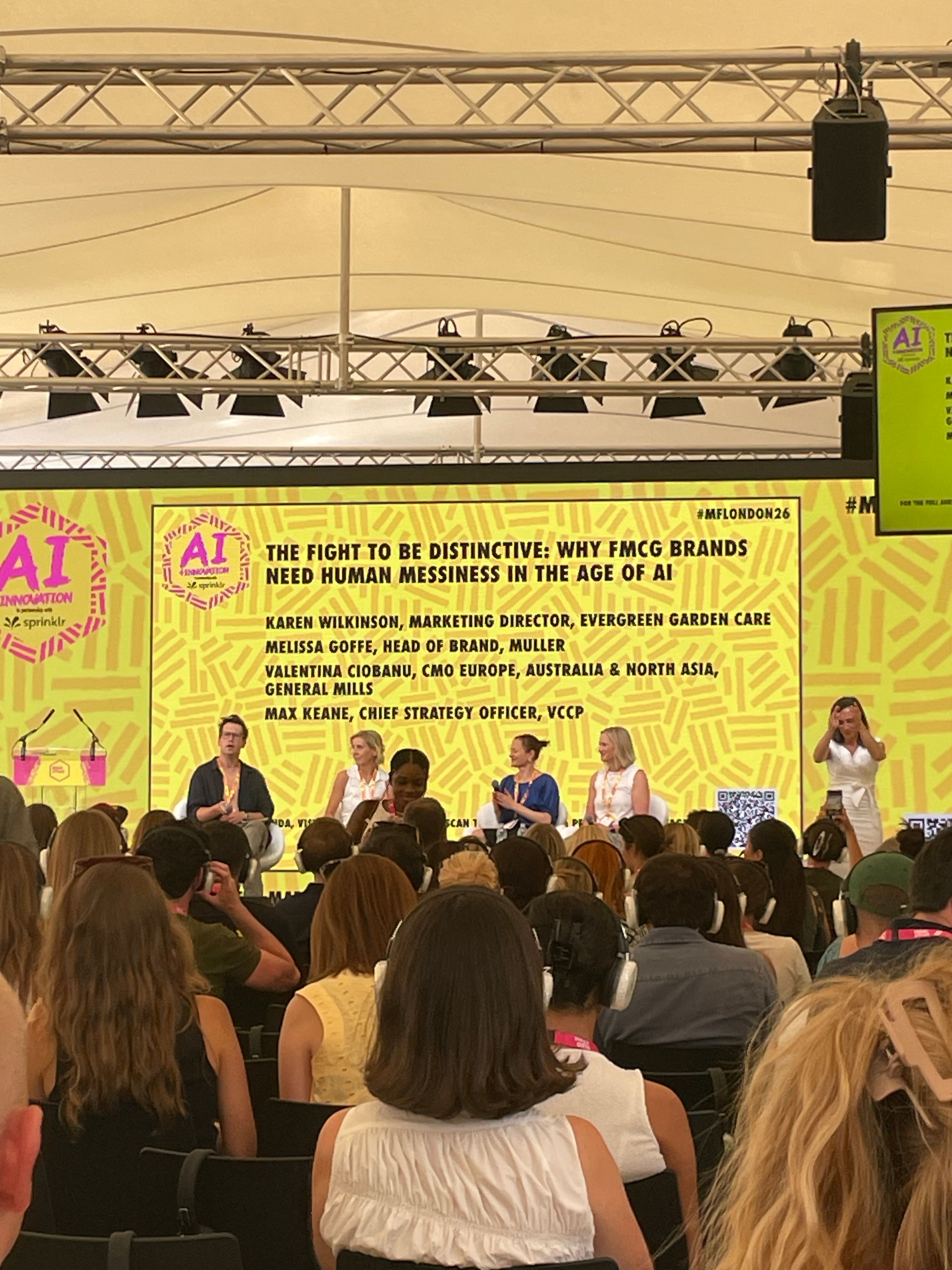
During a talk named ‘The fight to be distinctive: Why FMCG brands need human messiness in the age of AI’ Valentina Ciobanu, CMO of General Mills and Old El Paso said that AI could never be used for brand positioning. AI will never understand the awkward head tilt to eat a taco, the messy table and the salsa on your elbow during a first date.
Melissa Goffe, Head of Brand at Muller said: “play is inherently messy, we promote play in dairy, a bit of chaos in the mix can cut through, so AI is not suitable because it’s too formulaic and at risk of making things average. AI can create ‘good’ but ‘good’ is the death of great brands.
Harry Angers of Costa spoke of how the value of in person human moments have increased and the personal touch of a barista remembering your name is something AI can never replicate.
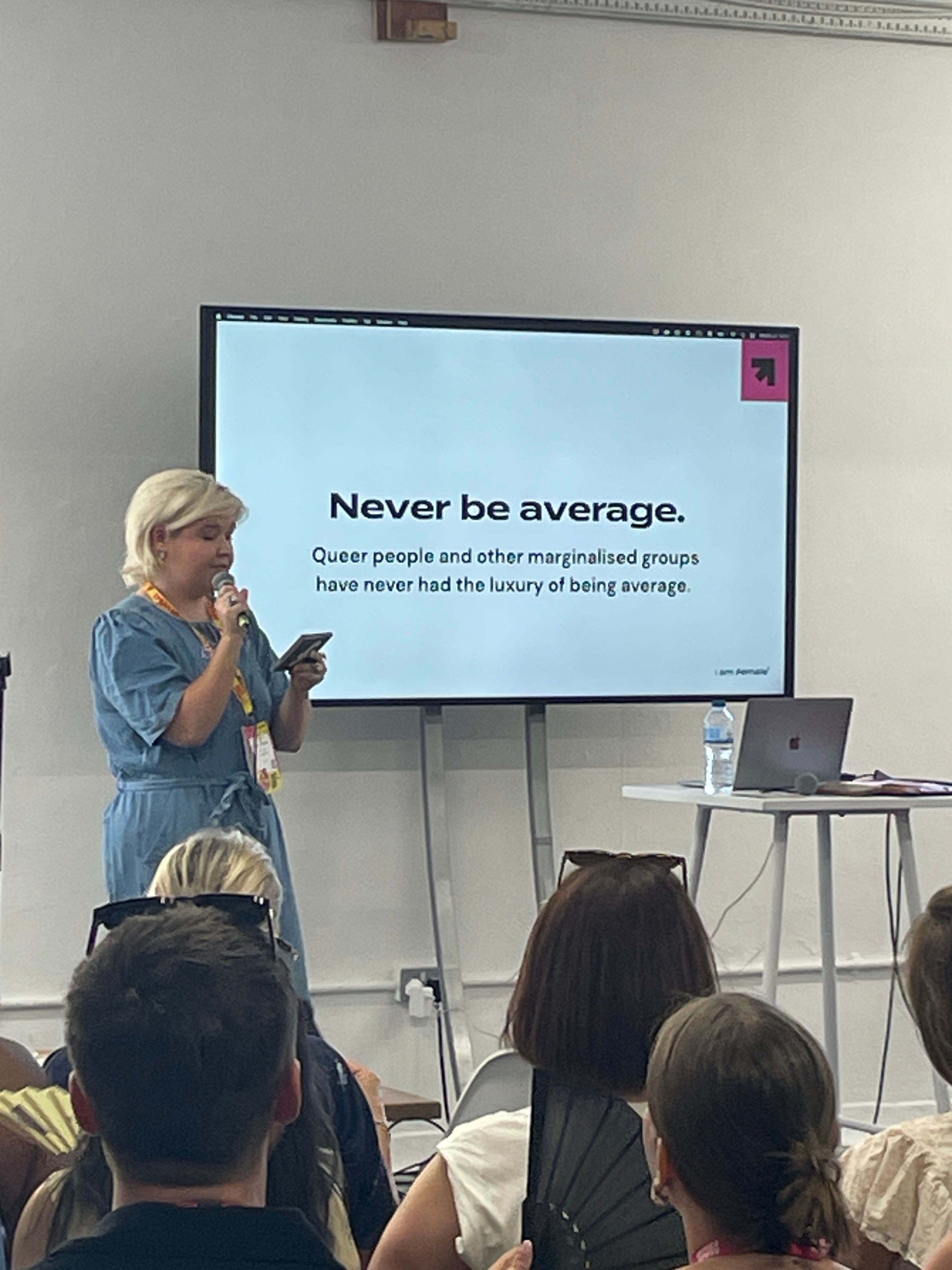
The talks with the most ‘human touch’ had to be the ones getting us to interact with each other. Usually there’s a lot of listening at MADfest and not quite enough doing, so big props to Annie Bartley and Harriet Phillips of I Am Female for their interactive talk: ‘Basic b*tch thinking is killing brands. Time to Think Queerer’ and Jonathan Wicks of Lego and Eva Cremers of Jelly for their ‘Permission to Play: How Lego x Jelly use creative play to unlock better thinking.
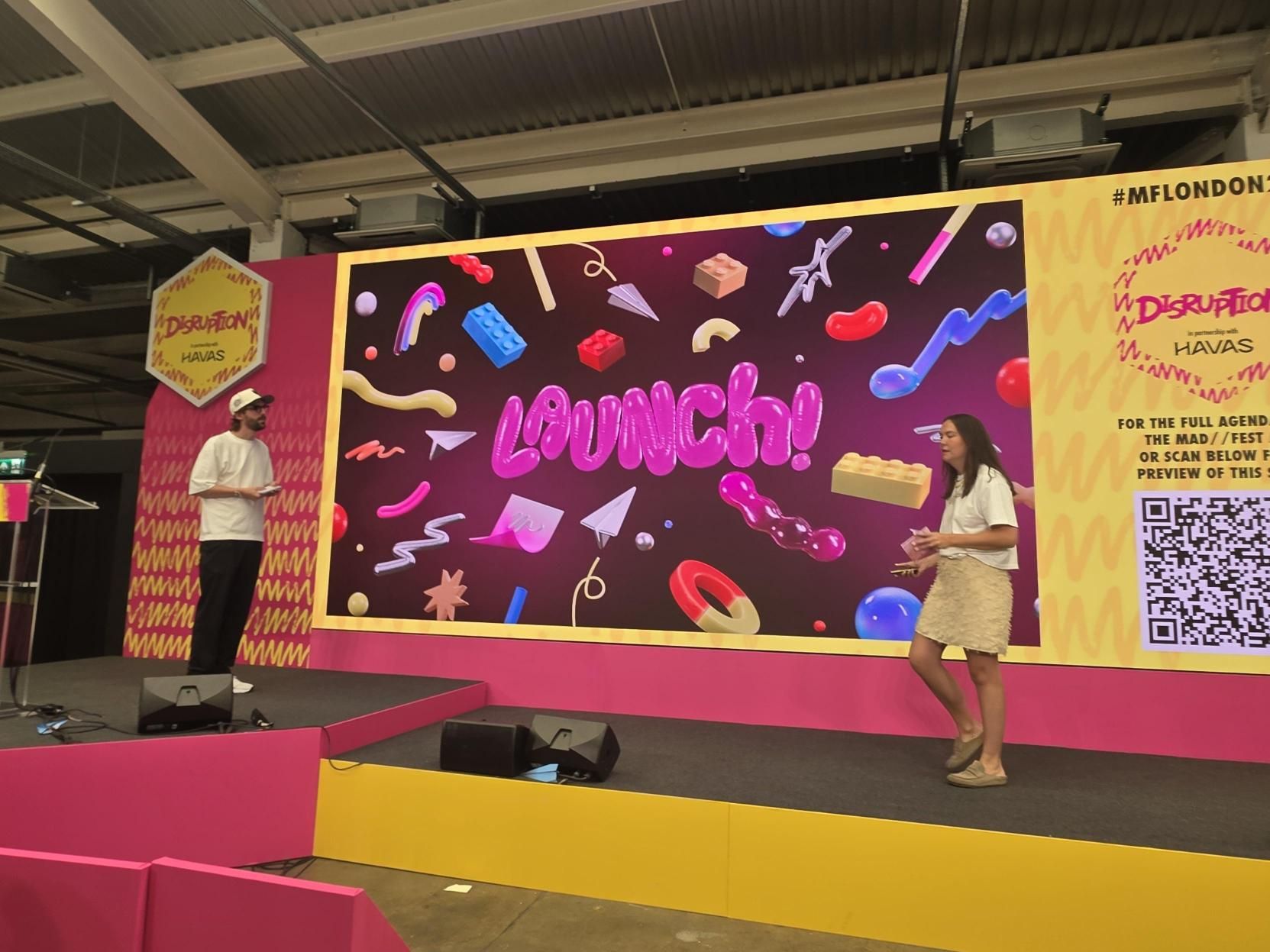
Annie and Harriet led an inspiring talk about dismantling the norm, embracing nuance and “fuck the default method”, they pushed us to get another human perspective and to always check to see if there are any other view points that have been missed. They got us all chatting to each other, working in groups and, as nervous as I was, I was greeted by an incredibly sweet and vivacious bunch of people who had bundles to say on why and how dating apps should stop commoditising loneliness and think more about how to build truly deep connections. They taught us to stop thinking about the few who “won’t like this”, because the ones who will, will be obsessed. “Because in a messy, non-linear world full of twists and turns, straight thinking no longer cuts it.”
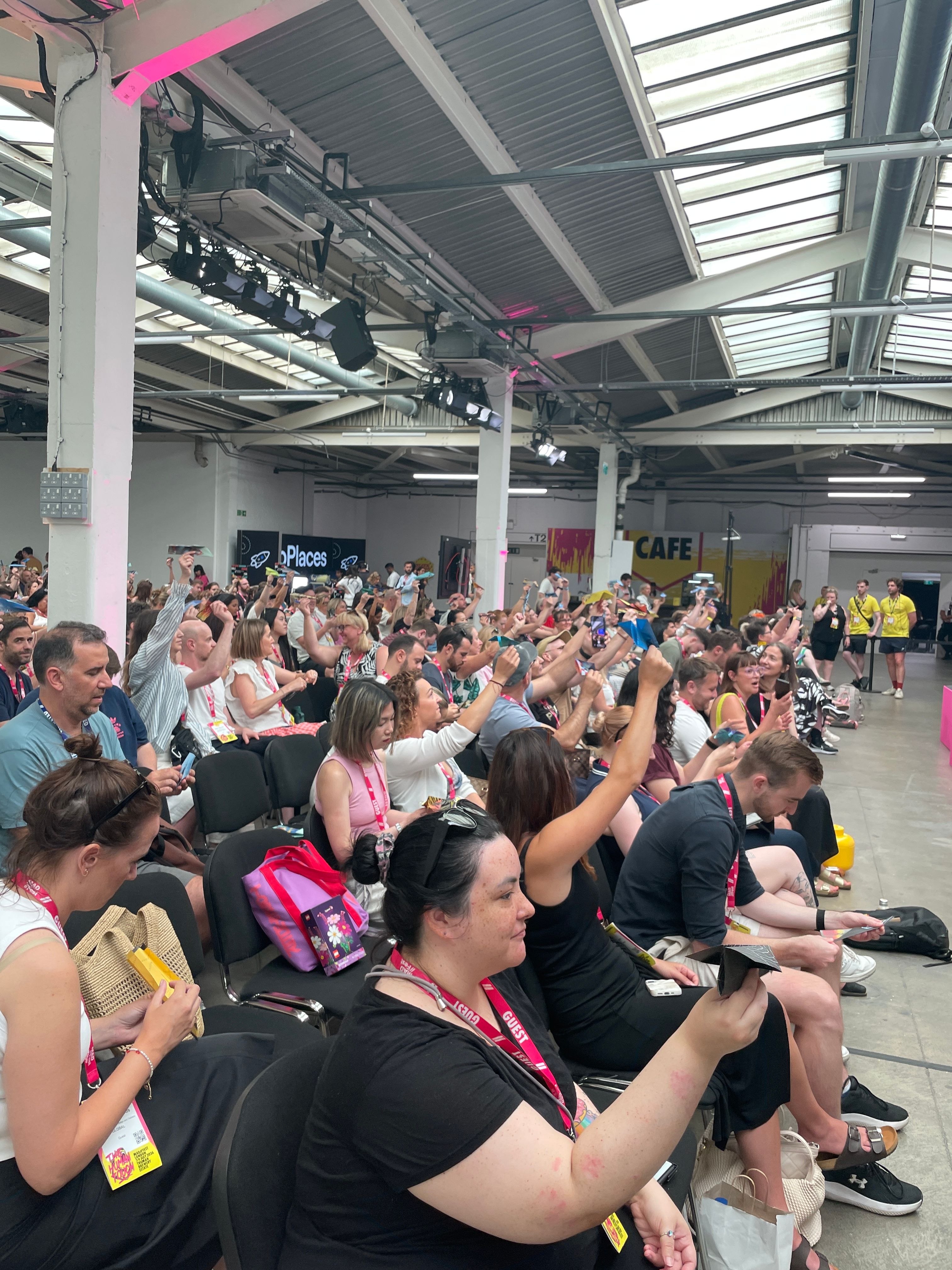
Jelly and Lego’s ‘Permission to Play’ led by the ever-charismatic duo Jonathan Wicks, CD of Lego and Eva Cremers, 3D artist/designer/director, had us building Lego ducks, making paper aeroplanes and turning to our neighbour and asking “why?”. Simply asking why 5 times and getting to the deep root of the issue, no matter the discomfort, will help us understand ourselves, each other and our creativity in a far more unique way.
One talk named ‘10 Myths about AI and advertising’ by Tom Goodwin, Founder of All We Have Is Now, implied that whenever creativity is involved, people can be terrified that they will get the answer ‘wrong’, or do something weird, and as a result they won’t get too creative and therefore remain safe and accepted. He said that AI doesn’t have this fear and will go to an extreme, without logic and personally he enjoys seeing these mistakes and fixing them.


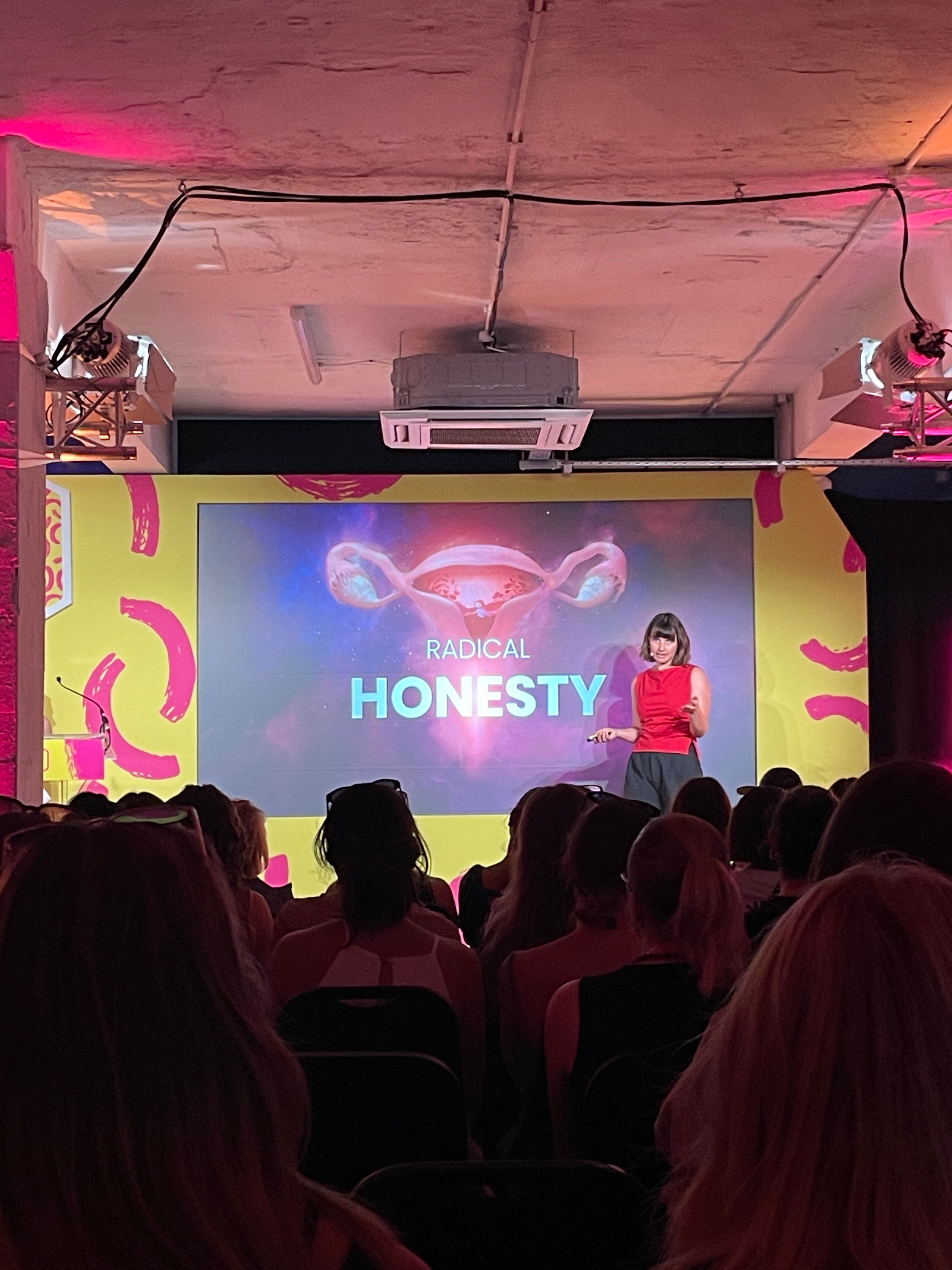
There’s nothing more ‘real’ and more human than talking about period blood. Once too taboo and ‘disgusting’ for pubilc discussion, now we have Luciana De Azevedo Lara of Bodyform and Henrietta Corley of AMV BBDO leading ‘Data doesn’t have periods - How Bodyform Blew Up a Category With Feelings’. They led an incredibly inspiring and creative talk about how their radical honesty and willingness to make people sit with their discomfort has meant that over the last 10 years the statistics have changed from 94% of people hiding their periods to now only 24%, an incredible feat for something half the population has historically been made to feel shame about.
Bodyform and AMVBBDO have created some of my all time favourite ads, I’m maybe a little bit biased due to my love of animation and illustration ; ) but I think the use of craft and severe honesty painted a beautiful and painful truth of what people go through. Bravo Bodyform.
To wrap up, yes AI can be helpful, it can save some time, it can analyse culture but it cannot FEEL it. It’s a tool, it’s not a replacement for creativity. And the inauthenticity and perfectionism can be off putting.
When Tom Goodwin asked a bunch of tech CEOs what they wanted their children to study, they all said it was the arts and the reason was that they wanted them to develop things and ideas that they hadn’t been able to. This speaks volumes to me. Because if we stop using our human intuition, curiosity and gut feeling then art will lose all meaning, we’ll disconnect from it and lack any inspiration as a result. The insanely talented artists of Jelly have endless ideas, techniques, skills, mediums, styles and personalities, so we celebrate their years of dedicated craftsmanship and encourage their wonderful and often unusual ways of thinking because it’s distinctive, it’s rare and it’s really powerful.
So let’s swivel our seats away from the screens and towards each other more often, because the best is yet to come, the best hasn’t even been fed into the machine yet.